Queer Places:
Forest Hills Cemetery and Crematory, Jamaica Plain, Suffolk County, Massachusetts, USA
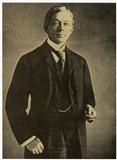 Hezekiah Eugene Bolles (January 6, 1853 - October 28, 1910) was born on January 6, 1853, on Bolles Hill in New London, Connecticut, to William Bolles (a printer, publisher,
bookseller, and abolitionist) and Cornelia Congdon (Palmer) Bolles. Bolles pursued a legal education, graduating from Boston University Law School, after which he
established a successful practice as an attorney in Boston, Massachusetts.
Hezekiah Eugene Bolles (January 6, 1853 - October 28, 1910) was born on January 6, 1853, on Bolles Hill in New London, Connecticut, to William Bolles (a printer, publisher,
bookseller, and abolitionist) and Cornelia Congdon (Palmer) Bolles. Bolles pursued a legal education, graduating from Boston University Law School, after which he
established a successful practice as an attorney in Boston, Massachusetts.
In 1882, Bolles married Elizabeth Clapp Howe (1853–1920) of Dorchester, Massachusetts. The couple settled in the Dorchester neighborhood, commissioning architect
John A. Fox in 1885 to design a grand home at 401 Quincy Street.
Beginning in the early 1880s, Bolles and his wife became avid and discerning collectors of early American decorative arts, combining inherited family pieces with rare
17th-, 18th-, and early 19th-century acquisitions. Over decades, their home became packed with museum-quality artifacts spanning 1630 to 1815, including Pilgrim-century
furniture, court cupboards, highboys, fine textiles, glass, and ceramics. Their assembly of American furniture was widely considered the finest and most comprehensive of its
era.
In 1909, the Metropolitan Museum of Art (The Met) in New York hosted the monumental Hudson-Fulton Celebration exhibition. Prompted by
Henry Watson Kent, Bolles lent dozens of primary pieces to the display. Recognizing the historical importance of keeping
the collection intact, Bolles agreed to sell his massive 434-piece collection to The Met. Financed by philanthropist Mrs. Russell Sage, the acquisition formed the
foundational core of the museum's historic American Wing, famously known as the Sage Collection.
In October 1909, H. Eugene Bolles joined with Henry Watson Kent and Luke Vincent Lockwood to establish The
Horace Walpole Society—an exclusive, invitation-only fraternal organization dedicated to the study, appreciation, and
preservation of American decorative arts, architecture, and history.
Following early organizational gatherings, formal foundational membership rolls were structured, and Bolles was officially recorded as a founding member upon the
society's formal inception in 1910.
Bolles's active participation in the newly formed society was brief; he passed away on October 28, 1910, shortly after its official establishment.
While historical records from the Gilded Age often obscured private personal lives—and Bolles was legally married to Elizabeth Clapp Howe until his death (with the couple
having no children)—he is documented within modern biographical compendiums focusing on historical queer figures.
The inclusion of early collectors, antiquarians, and founding members of elite homosocial organizations like the Horace Walpole Society (which was intentionally designed
as an all-male assembly of scholars and bachelors/collectors during its foundational decades) highlights networks of prominent unmarried or homosocially-bonded men who
shaped American art preservation at the turn of the 20th century.
References:
- The Metropolitan Museum of Art (The Met) / American Wing Archives: Documentation concerning the 1909 Hudson-Fulton Celebration exhibition, the acquisition of the 434-piece H. Eugene Bolles collection (funded by Mrs. Russell Sage), and its establishment as the foundational core of the museum's American Wing.
- The Winterthur Library (Joseph Downs Collection of Manuscripts and Printed Ephemera): The Horace Walpole Society Records (1909–2013), housing administrative minutes, foundational correspondence, membership rolls, and biographical profiles of founding members including H. Eugene Bolles.
- Historic Forest Hills Cemetery & Research Archives: Biographical overviews detailing Bolles's life in Dorchester, Massachusetts, his legal career, and his partnership with Elizabeth Clapp Howe Bolles.
- American Aristocracy & Gilded Age Patronage Registers: Historical registers tracking Gilded Age collectors of American decorative arts and patrons of the arts.
Support this project
This website is a passion project researched, developed, and funded entirely by me. If you find the content valuable and would like to help support the ongoing research and hosting costs, any contribution is deeply appreciated.
Thank you for keeping this independent resource alive!
My books on Amazon: Elisa Rolle's books
BACK TO HOME PAGE